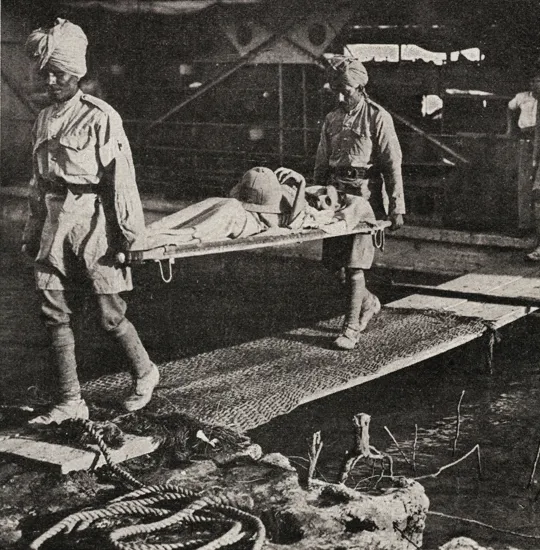
War chronicle · 29 April · Kut el Amara, Mesopotamia
Disaster at Kut-el-Amara
British and Indian troops surrender to the Ottomans after a desperate five-month siege.
For five months, British and Indian soldiers have been under siege at Kut-el-Amara (in modern-day Iraq). The 14,000-strong garrison has been reduced to 10,000. Many of them are sick and starving. Most will not survive when they are later captured. How did it all go so wrong?
The story begins in November 1914 with British and Indian troops being sent to guard oil facilities in the Persian Gulf. They soon occupy the city of Basra, easily overwhelming local defences. Encouraged, they push further inland towards Baghdad.
But the Ottomans surprise the under-resourced and overstretched troops with a massive counterattack – beginning the siege at Kut-el-Amara. Two desperate attempts to break the siege fail, with the loss of tens of thousands of men (including relief forces). The soldiers finally surrender to the Ottomans.
After the disaster at Kut the British and Indian forces undergo a massive expansion and reorganisation, before advancing once more on Baghdad. Among the reinforcements is the New Zealand Wireless (Radio) Troop who spend the next two years on the expedition.
Photos & objects