War chronicle · from 6 August · Wellington, New Zealand
New Zealanders enlist
New Zealand men sign up to serve in their thousands, eager for adventure and action.
The news of war spreads like wildfire across New Zealand. The army is quickly overwhelmed by the number of men wanting to enlist in the New Zealand Expeditionary Force (NZEF) – some 14,000 try to join up in the first week alone.
Although 20 is the minimum age to join, a few 17-year-olds manage to bluff their way in, eager for an adventure. While many wives and parents are afraid of what might happen to their loved ones, they try not to show it. In public, the mood is one of overwhelming support for the war.
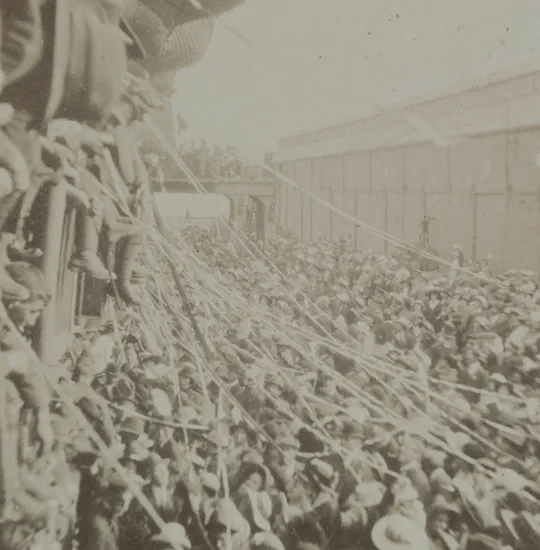
In every town around the country, friends and family line the streets to say goodbye to the thousands of men.
On the morning of 16 October, the first NZEF convoy steams out of Wellington Harbour, and off to war. For some, this day marks the last time they see New Zealand.
For many Māori, the war is a chance to be viewed as equals, fighting alongside the British. The government does not give Māori permission to fight until mid-September 1914, when the Native Contingent is formed. Other groups of Māori forbid their men to fight – unwilling to support the government or the British who had fought iwi who wanted to retain land and sovereignty.
Photos & objects